

Sozi Inspiration - Effective Warehousing
Effective Warehousing: How Space Optimization Inspires New Ideas
Optimizing warehouse space is a key factor in improving logistical processes and reducing costs. Many companies find inspiration in successful examples of warehouse optimization that demonstrate innovative approaches to space and resource management. Let’s explore some examples of effective solutions for warehouses that can inspire other companies.
1. Vertical Storage
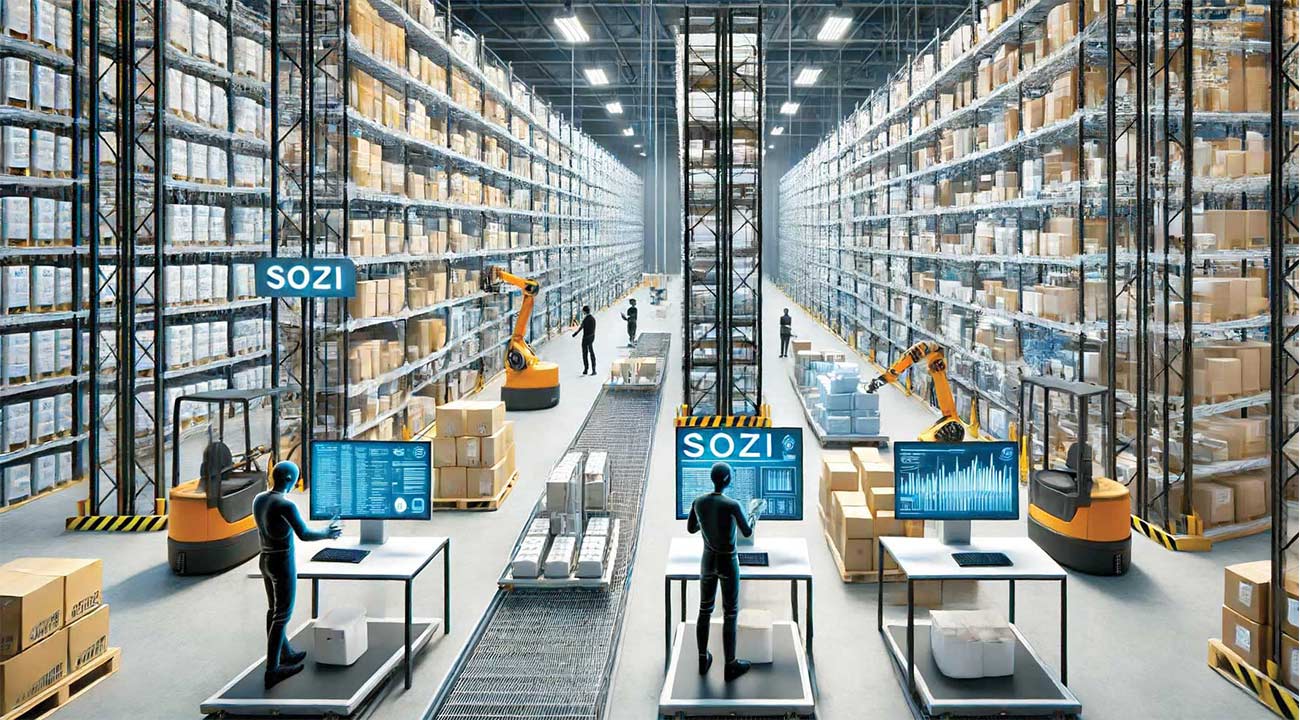
One of the most popular methods for optimizing warehouse space is vertical storage. Instead of expanding the warehouse horizontally, companies utilize the height of the space by installing multi-level racks. This significantly increases the warehouse’s capacity without the need for additional square footage. A notable example is Amazon, which uses automated vertical storage systems to manage and process goods efficiently.
2. Mobile Shelving
Mobile shelving units are an innovative solution that allows for the maximum use of warehouse space. These shelves are installed on tracks and can move to provide access to the needed items, reducing the number of aisles and increasing the usable storage area. IKEA successfully uses mobile shelving to store large items in its distribution centers, optimizing the use of space and improving accessibility.
3. Automation and Robotics
Implementing automated warehouse management systems (WMS) and robotic technologies greatly enhances warehouse operations. Robots can handle tasks such as moving goods, picking orders, and inventory checks, reducing processing time and minimizing errors. Ocado is an excellent example, utilizing robots to manage its warehouse operations and ensuring fast and accurate order fulfillment.
4. Optimizing Movement Paths
Efficient management of movement paths within the warehouse helps reduce time and costs associated with logistics. Companies use route planning systems and data analysis methods to optimize the movement of goods. DHL has implemented a route management system to optimize the movement of goods, enhancing overall efficiency in warehouse operations.
5. Smart Storage Systems
Using smart storage systems automates the process of inventory management. Systems utilizing Internet of Things (IoT) technologies and Radio-Frequency Identification (RFID) allow real-time tracking of goods’ status and location within the warehouse. Walmart actively uses RFID technologies to manage its warehouse inventory, improving efficiency and accuracy.
Conclusion
Optimizing warehouse space opens up new opportunities for improving efficiency and reducing costs. By drawing inspiration from successful examples of companies that use innovative solutions to manage their warehouse operations, other businesses can implement similar practices and achieve high results. Vertical storage, mobile shelving, automation, optimizing movement paths, and smart storage systems are all methods that can significantly improve warehouse operations and contribute to business growth.
Effective warehousing is not just a way to cut costs, but also a source of inspiration for implementing new ideas and technologies that can transform logistics processes and lead to the success of the company.