

Polycarbonate or Acrylic – Which Traffic Mirror Is More Suitable?
Polycarbonate or Acrylic – Which Traffic Mirror Is More Suitable?
One of the most common questions when choosing a traffic mirror is whether to select a polycarbonate traffic mirror or an acrylic traffic mirror. Both types are widely used in parking lots, warehouses, industrial facilities, intersections, ramps, and areas with limited visibility, but there are important differences between them.
Many customers search for which traffic mirror is “better,” but the more important question is actually: which traffic mirror is more suitable for the specific site?
In this article, we will take a detailed look at the differences between polycarbonate traffic mirrors and acrylic traffic mirrors, their advantages, applications, pricing, and when each option is the better choice.
What Is the Main Difference Between Polycarbonate and Acrylic?
The main difference between a polycarbonate traffic mirror and an acrylic traffic mirror is the material of the reflective surface.
Polycarbonate is a material known for its impact resistance and practicality. It is suitable for facilities where there is a risk of mechanical impact or intensive daily use.
Acrylic provides a cleaner reflection, better optical clarity, and higher visual comfort. It is often used in professional and representative environments where image quality is important.
Both options can be the right choice – the important thing is that the traffic mirror is selected according to the actual working conditions.
When Should You Choose a Polycarbonate Traffic Mirror?
Polycarbonate traffic mirrors are a practical solution for everyday use in industrial and warehouse environments. They are commonly used in:
- warehouses;
- logistics centers;
- loading ramps;
- manufacturing facilities;
- internal industrial roads;
- parking lots;
- underground garages;
- work and service areas.
Advantages of Polycarbonate Traffic Mirrors
- Higher impact resistance – suitable for facilities with a higher risk of mechanical impact.
- Lighter weight – easier transportation and installation.
- Practical for industrial environments – widely used in warehouses and production facilities.
- More affordable price – a good solution for equipping multiple observation points.
- Suitable for everyday operation – used in facilities with intensive traffic.
For many standard facilities, a polycarbonate traffic mirror is a fully sufficient solution and offers an excellent balance between price, functionality, and safety.
When Is Polycarbonate the Best Choice?
Choose a polycarbonate traffic mirror if:
- the site is a warehouse or industrial facility;
- there is a risk of impacts or mechanical damage;
- you are looking for a practical solution;
- you need to equip multiple observation points;
- the main priority is safety and functionality;
- the facility operates intensively every day.
When Should You Choose an Acrylic Traffic Mirror?
Acrylic traffic mirrors are a professional solution for locations where cleaner reflection, better optical clarity, and more comfortable visibility are important.
They are often used in:
- premium parking facilities;
- intersections;
- public spaces;
- office and business buildings;
- hotels;
- logistics complexes;
- professional industrial facilities;
- areas with constant vehicle traffic.
Advantages of Acrylic Traffic Mirrors
- Clearer reflection – better visibility and more precise image quality.
- Higher optical clarity – easier perception of the situation.
- Better visual comfort – important in facilities with active daily traffic.
- Professional-grade quality – suitable for representative and professional sites.
- More presentable appearance – commonly used in public and business spaces.
An acrylic traffic mirror is especially suitable for locations where drivers need to quickly and clearly recognize approaching vehicles, people, or obstacles.
When Is Acrylic the Best Choice?
Choose an acrylic traffic mirror if:
- you want the clearest possible reflection;
- the facility is representative or public;
- the mirror will be used daily by many vehicles;
- visual comfort is important;
- you are looking for a higher-class solution;
- the site is a parking lot, intersection, or professional infrastructure area.
Polycarbonate or Acrylic – Which Traffic Mirror Is More Durable?
This is one of the most frequently asked questions.
Polycarbonate traffic mirrors are generally more resistant to mechanical impact and more practical for industrial environments.
Acrylic traffic mirrors provide higher reflection quality and better visual results.
That is why the choice should not be “which one is better,” but rather:
- whether the facility requires higher impact resistance;
- or higher optical clarity.
Both types of traffic mirrors have their proper application.
Why Are Acrylic Traffic Mirrors More Expensive?
The price difference between a polycarbonate traffic mirror and an acrylic traffic mirror is mainly due to:
- the material;
- reflection quality;
- optical clarity;
- manufacturing technology;
- the product class.
Acrylic traffic mirrors are more suitable for customers looking for a professional solution with higher image quality.
At the same time, polycarbonate traffic mirrors remain an excellent solution for many standard and industrial applications.
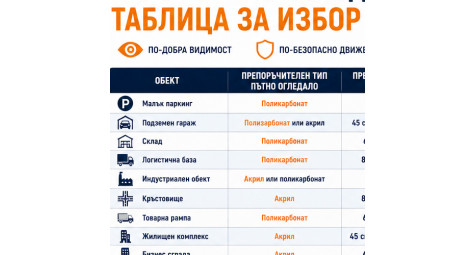
How to Choose the Right Traffic Mirror for Your Facility?
When selecting a traffic mirror, it is important to consider:
- the type of facility;
- the viewing distance;
- traffic intensity;
- the risk of mechanical impact;
- operating conditions;
- whether wall or pole mounting is required;
- whether practicality or higher optical clarity is the priority.
For Warehouses and Industrial Facilities
The most practical choice is often a polycarbonate traffic mirror, especially in areas with forklift traffic and intensive daily operations.
For Parking Lots and Public Areas
An acrylic traffic mirror is often the better choice, especially when cleaner image quality and a more professional visual result are required.
For Intersections and Outdoor Roads
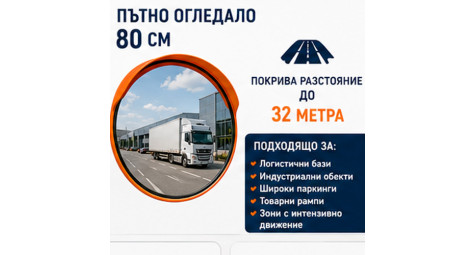
In such locations, larger models – 800 mm or 1000 mm – are usually used. Many customers prefer acrylic traffic mirrors because of their better visibility.
Traffic Mirror with Wall or Pole Mounting?
Some traffic mirror models allow universal installation.
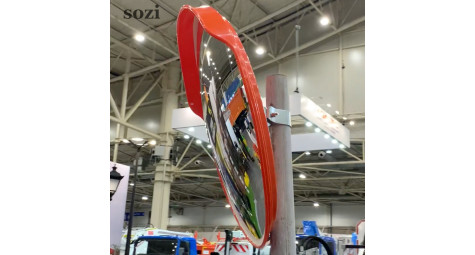
For example, models such as DZ-600-TR and DZ-800-TR can be mounted:
- on a pole;
- on a post;
- on a wall;
- on a facade;
- on a column.
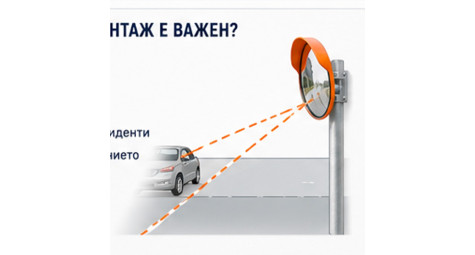
This simplifies installation for different types of facilities and allows better positioning of the traffic mirror.
Which Traffic Mirror Is the Most Suitable?
There is no universal answer.
A polycarbonate traffic mirror is an excellent choice for industrial and warehouse environments where practicality and durability are priorities.
An acrylic traffic mirror is more suitable when higher reflection quality and a more professional visual result are required.
Both options can be the right solution when selected according to the actual operating conditions.
Why Choose SOZI Traffic Mirrors?
SOZI offers professional traffic mirrors for parking lots, warehouses, intersections, ramps, and industrial facilities.
Our product lines include:
- polycarbonate traffic mirrors;
- acrylic traffic mirrors;
- sizes 450 mm, 600 mm, 800 mm, and 1000 mm;
- models for wall and pole mounting;
- solutions for B2B customers;
- consultation during selection;
- delivery across Europe.
SOZI models are selected and manufactured according to specifications for professional use. Our goal is to provide not just a traffic mirror, but the right solution for safety, visibility, and traffic control.
Traffic Mirrors Across Europe
SOZI delivers traffic mirrors to Germany, Greece, Romania, Poland, Bulgaria, Italy, Spain, France, the Netherlands, Austria, Belgium, the Czech Republic, Slovakia, Croatia, and other European countries.
If you are looking for a traffic mirror, parking mirror, warehouse mirror, intersection mirror, convex mirror, or safety mirror – SOZI offers professional solutions for better visibility and improved safety.