

Where Are Traffic Mirrors Used? Parking Areas, Warehouses and Industrial Facilities
Where Are Traffic Mirrors Used?
Traffic mirrors are used anywhere there is limited visibility, a risk of collision, or a need for better traffic control. They are one of the most effective solutions for improving safety in parking areas, warehouses, industrial facilities, ramps, intersections, and internal roads.
Many people associate a traffic mirror only with road intersections, but today traffic mirrors are also widely used in logistics, manufacturing, commercial facilities, residential complexes, and industrial sites.
In this article, we will take a detailed look at where traffic mirrors are used, what problems they solve, and how to choose the right mirror depending on the type of facility.
Why Are Traffic Mirrors Used?
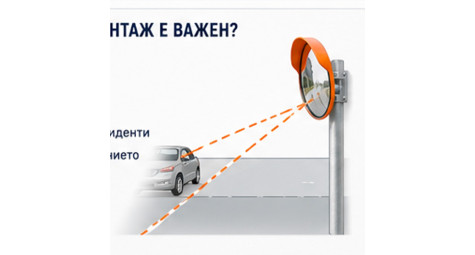
The main function of a traffic mirror is to provide better visibility in areas with restricted sight lines. Thanks to their convex shape, traffic mirrors allow drivers and operators to see approaching vehicles, pedestrians, forklifts, or machinery before they enter the direct field of view.
Traffic mirrors help with:
- reducing the risk of accidents;
- improving traffic control;
- safer maneuvering;
- better visibility on corners and ramps;
- monitoring blind spots;
- improving safety for vehicles and pedestrians.
A properly selected traffic mirror is an important part of traffic organization and overall site safety.
Traffic Mirrors for Warehouses
Traffic mirrors for warehouses are one of the most common applications for this type of equipment. Warehouse environments often include:
- narrow aisles;
- high storage racks;
- blind spots;
- forklift traffic;
- transport carts;
- active internal logistics operations.
Traffic mirrors help forklift operators and employees see approaching equipment or people at corners and aisle intersections.
The most commonly used sizes in warehouses are:
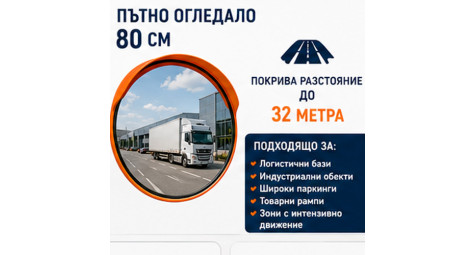
- 60 cm traffic mirror;
- 80 cm traffic mirror.
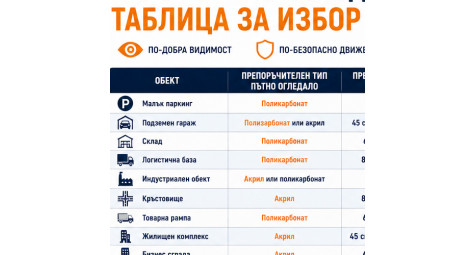
For warehouse and industrial environments, polycarbonate traffic mirrors are often preferred because of their high impact resistance and durability.
Traffic Mirrors for Parking Areas
Traffic mirrors for parking areas are commonly used in:
- underground garages;
- residential complexes;
- office buildings;
- shopping centers;
- hotels;
- public parking areas.
In parking areas, a traffic mirror provides better visibility when exiting ramps, corners, or areas with restricted sight lines.
Convex traffic mirrors help drivers see approaching vehicles and pedestrians, reducing the risk of collisions.
The most commonly used sizes for parking areas are:
- 60 cm traffic mirror;
- 80 cm traffic mirror.
For more premium and representative facilities, acrylic traffic mirrors are often preferred because of their clearer reflection and improved visual comfort.